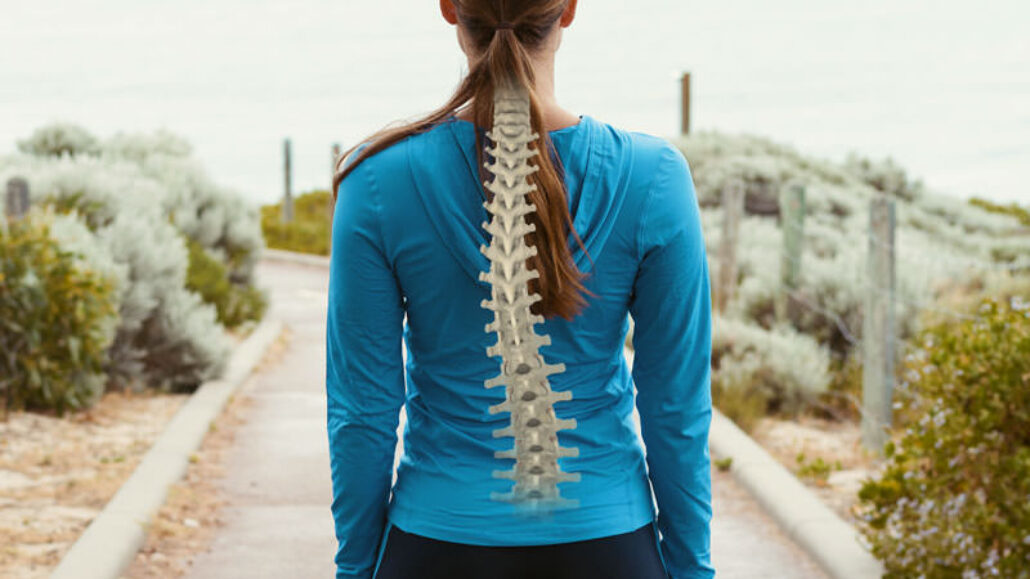
This spine condition is fairly common. We discuss the different types of scoliosis, and explain how medical treatment can help scoliosis patients live full active lives.
Scoliosis is a common spine condition. It can occur at any age, but usually appears during childhood, affecting approximately one in every 40 children. In some cases, the condition becomes apparent when children are toddlers, but the majority of cases are diagnosed when children are age 10 or older.
Your spine, or backbone, runs down your back from the base of the skull. Although everyone’s spine has a slight curve, people with scoliosis have a spine that curves too much from side to side. Instead of running straight down the back, a spine affected by scoliosis may curve in a “C” or an “S” shape. Common types of scoliosis include the following:
- Idiopathic scoliosis. More than 80 percent of scoliosis cases are idiopathic, a term that means unknown cause. Although the cause of this condition is not yet understood, we know that it does tend to run in families and that it is not like a preventable disease. There are no measures a parent can take to prevent the condition from developing.
- Congenital scoliosis. This type of scoliosis is something you are born with; as the fetus develops, the scoliosis prevents vertebra from forming completely or from separating properly. Research indicates that about one in three children with parents affected by scoliosis will develop the condition. Congenital scoliosis may be associated with heart and kidney problems as well as other health issues.
- Neuromuscular scoliosis. Scoliosis can develop in response to muscle imbalance or weakness caused by medical conditions affecting nerves and muscles. Neuromuscular conditions that may lead to scoliosis include cerebral palsy, muscular dystrophy, and spinal cord injury.
Spinal curves caused by scoliosis will not straighten out on their own. This condition is rarely life-threatening, and most cases remain mild. Many children do not need treatment; they grow up to lead normal lives, but the small curve in their spine never goes away. If a curve is large, however, it may become more severe over time and require medical treatment. Very pronounced curves can affect the heart and lungs.
If you suspect that your child may have scoliosis, contact one of the spine specialists at Summit Orthopedics. We will evaluate the curvature, monitor it as your child grows, and, in appropriate cases, consider bracing or surgical options to prevent the curvature from becoming more severe over time.
Summit Orthopedics offers comprehensive spine expertise
Our back specialists diagnose spine problems and design custom treatment plans built on a conservative, nonsurgical approach. Most patients find relief through treatments including guided injections, specialized physical therapy, biofeedback, exercise, activity modification, and medication. When conservative care does not relieve symptoms, our highly skilled surgeons offer proven, evidence-based surgical options. Together with you, we will determine the right course of action.
Start your journey to a healthy spine. Find your spine expert, request an appointment online, or call us at (651) 968–5201 to schedule a spine consultation.
Summit has convenient locations across the Minneapolis-St. Paul metro area, serving Minnesota and western Wisconsin. We have state-of-the-art centers for comprehensive orthopedic care in Eagan, MN, Plymouth, MN, Vadnais Heights, MN, and Woodbury, MN, as well as additional community clinics throughout the metro and southern Minnesota.